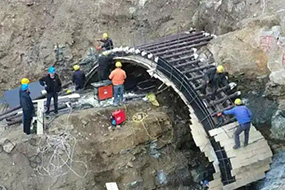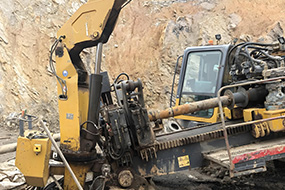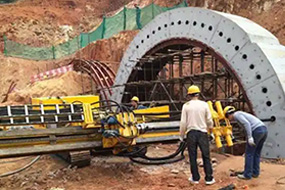
For drilling operations in Yibin, where equipment uptime and labor efficiency directly impact profitability, the transition from traditional anchor bolt systems to self-drilling anchor bolts represents a strategic financial decision. Traditional methods require separate drilling, cleaning, and anchoring steps, which demand additional machinery, more manual labor, and extended project timelines. Self-drilling anchor bolts combine the drilling and anchoring functions into a single, continuous operation, eliminating the need for pre-drilled holes and reducing the number of tools and personnel on site. This integration directly lowers equipment fuel consumption, minimizes wear on drill bits, and slashes labor hours per anchor point. Moreover, because the bolt itself cuts its own thread into the substrate, there is less risk of hole misalignment or structural weakness, which in turn reduces costly rework and material waste. For Yibin’s machinery sector, where projects often involve dense rock or reinforced concrete, this efficiency gain translates into measurable savings on every single drilling task, making it a clear upgrade in both operational flow and bottom-line expense.
Beyond immediate cost savings, self-drilling anchor bolts offer superior load-bearing capacity and long-term reliability, which is critical for Yibin’s heavy machinery and infrastructure projects. The self-drilling design ensures a tighter mechanical interlock between the bolt and the surrounding material, reducing vibration-induced loosening that is common with conventional anchors. This is especially important in high-stress environments such as mining equipment foundations, bridge mountings, or industrial plant supports, where a single anchor failure can lead to catastrophic downtime and expensive repairs. The corrosion-resistant coatings and hardened steel construction of modern self-drilling bolts extend service life even under harsh chemical or weather exposure, meaning fewer replacements over the operating lifetime. For a company managing drilling operations in Yibin, this translates into lower maintenance frequency, reduced inspection costs, and a smaller inventory of spare parts. When calculated over the lifespan of a project, the initial higher unit price of a self-drilling bolt is easily offset by the elimination of secondary processes and the decreased likelihood of premature structural failure, proving it to be a more economical and reliable choice in the long run.
One of the most overlooked financial benefits of adopting self-drilling anchor bolts in Yibin is the simplification of supply chain management and workforce skill requirements. Traditional anchoring systems require a complex inventory of separate drill bits, setting tools, cleaning rods, and adhesive cartridges, each with its own storage, maintenance, and reorder cycle. Self-drilling bolts consolidate this list into a single product SKU, simplifying procurement and reducing the risk of stockouts or misordered parts that can halt a drilling operation. Furthermore, installation training is significantly less demanding; workers no longer need to master the nuances of hole depth calibration, dust removal, or adhesive curing times. A newly hired technician can become proficient with self-drilling systems in a fraction of the time, reducing onboarding costs and allowing for more flexible crew assignments across different sites in the Yibin region. The reduction in tool variety also decreases the chance of on-site tool loss or damage, which for remote drilling locations can be a substantial logistical nightmare. In an environment where skilled labor is both scarce and expensive, this operational simplification not only trims direct expenses but also improves project scheduling reliability, providing a competitive edge for Yibin machinery drilling operations.