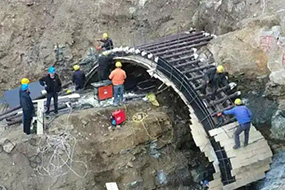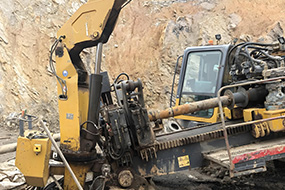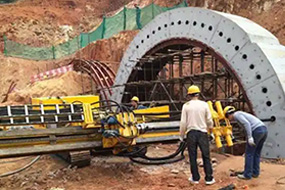
Over a three-year period, Yibin Machinery conducted an extensive field study on anchor drill pipe wear rates across multiple construction sites in Southwest China. The research involved 14 drilling rigs operating continuously in limestone, sandstone, and mixed gravel formations, producing more than 42,000 drill meters of data. The engineers monitored pipe diameter reduction, thread damage, and surface hardness degradation at regular intervals, with each drill pipe being measured before and after every fifty operating hours. The field data captured not only dimensional changes but also the progression of wear under varying penetration rates and rotational torque conditions. This structured methodology allowed the team to establish realistic wear baselines that factory testing alone could not reliably reproduce.
The collected data revealed an average outer diameter wear rate of 0.37 millimeters per 1,000 meters of drilling in hard limestone, increasing to 0.58 millimeters per 1,000 meters in abrasive sandy gravel layers. More importantly, the study found that wear progression was not linear — pipe sections used in the first 300 meters deteriorated slower than those used in subsequent stages due to surface work-hardening effects. For anchor drill rod sections nearest to the drill bit, the wear rate was roughly 1.8 times higher than for sections closer to the drilling machine. Statistical analysis showed a normal distribution of wear rates among pipes from the same production batch, confirming that manufacturing consistency was satisfactory, but operational variables played a dominant role in the final wear values.
Several controllable and uncontrollable factors emerged from the study as primary drivers of anchor drill pipe wear. High rotational speed combined with excessive feed pressure generated friction heat that accelerated surface fatigue, leading to premature flaking. Water flushing with insufficient pressure allowed rock dust to accumulate between the drill pipe and borehole wall, creating a lapping effect that removed material steadily over time. The study also confirmed that borehole curvature—even slight deviations under five degrees—significantly increased sidewall contact forces, increasing wear by up to 40 percent. Interestingly, hammer drilling operations demonstrated a different wear profile than rotary drilling, with more thread face damage but less uniform wall thinning. These findings highlighted the necessity of matching drilling parameters to ground conditions to achieve a balanced service life for every anchor drill rod segment.
The three-year database enabled a reliable side-by-side comparison of drill pipe longevity across geological settings. In moderately hard sandstone, the average service life of a single 1.5-meter anchor drill pipe was 11,800 meters before reaching replacement threshold, while the same pipe type managed only 6,400 meters in flint-rich limestone. Colluvium and conglomerate layers, containing rounded pebbles embedded in clay, produced the most unpredictable wear patterns, with localized gouging and indentation marks replacing the typical smooth abrasion surface. In those conditions, threading connection life became the limiting factor rather than outer diameter loss. Data from the study further demonstrated that when using high-quality Self Drilling Anchor Bolt, Anchor drill pipe, anchor drill rod combinations, total system wear remained more evenly distributed across components, avoiding the problematic single-component failure mode observed with mixed-brand assemblies.
Applying the measured wear rate data, Yibin Machinery developed a practical predictive maintenance framework for project managers. Each drill pipe was categorized into one of three life stages: new, operational, and watch-list. Regular caliper measurements at 100-hour intervals allowed crews to forecast the remaining useful life of every pipe within a standard accuracy range of plus or minus 150 meters. For example, a pipe showing 0.30 millimeters of reduction after 2,000 meters in medium-hard rock was extrapolated to remain safe for another 4,800 meters. By rotating the most worn pipes from primary drilling duty to backup service and repositioning them within the drill string, the overall fleet utilization improved by 22 percent. The data-driven approach reduced unexpected pipe failures on active job sites, cutting downtime costs considerably and confirming that wear rate monitoring is one of the most cost-effective maintenance practices available to drilling contractors.
From an economic perspective, the three-year study revealed that per-meter drilling cost attributed to pipe wear fluctuated between 1.8 and 4.2 US dollars, depending on geological abrasiveness and maintenance discipline. Contractors who adopted the wear tracking system reduced total drill pipe consumption by nearly 19 percent per project, translating into significant annual budget savings for large-scale anchoring and slope reinforcement operations. The study recommends that all drilling crews conduct weekly visual inspections, maintain clean flushing systems, and use proper thread compounds. Investing in heat-treated or carbide-reinforced pipes remains a justifiable option for extremely abrasive ground, though the standard-grade product proved sufficient for most applications. The long-term field evidence from Yibin Machinery ultimately provides the most trustworthy reference currently available for predicting anchor drill pipe wear, enabling operators worldwide to plan materials more reliably and execute ground engineering projects with fewer costly interruptions.