I. Ignored Formation Hardness Parameters: Hidden Dangers in Drill Pipe Selection
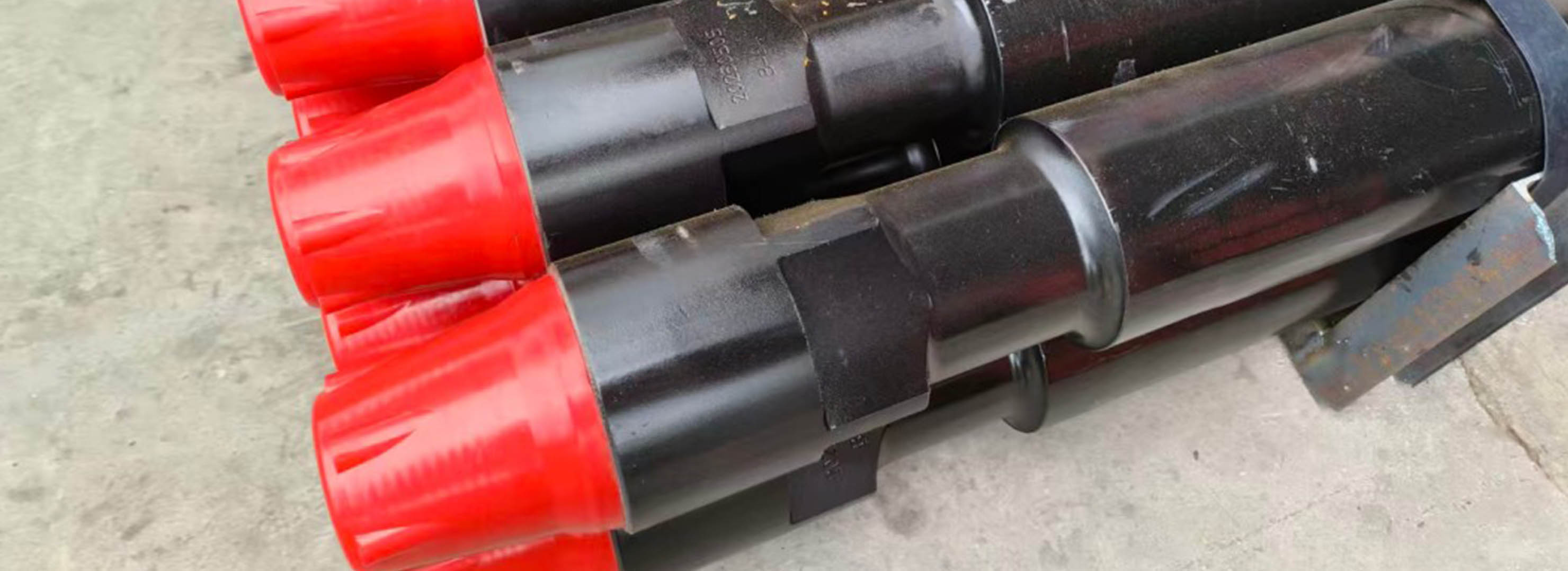
A T4 drill pipe in a certain mine suddenly fractured during the third week of operation. Inspection revealed the fracture was located in the middle of the pipe, exhibiting typical fatigue brittleness characteristics. The selection report showed that the technician only considered the hole depth and diameter, failing to incorporate the Protodyakonov hardness coefficient of the rock measured on-site. This section of the mine consists of highly silicified altered rock, with local hardness exceeding F=12, far exceeding the impact load that conventional drill pipe wall thickness can withstand. For every 2 mm reduction in wall thickness, the stress amplitude at the same impact frequency increases by nearly 30%, a crucial parameter that was precisely overlooked in the selection process. One day of equipment downtime resulted in losses exceeding 80,000 yuan, while the cost of replacing the entire drill pipe was only a fraction of the downtime losses.
II. Torque and Speed Imbalance: An Early Warning Sign of Bottom-of-Well Accidents
On-site records showed that in the two shifts prior to the drill pipe fracture, the operator repeatedly reported abnormal torque fluctuations, but these were all attributed to "normal formation changes." In reality, the power head selected for the T4 drill pipe had an output torque of 4200 N·m and a rotation speed set at 85 r/min, while the recommended matching parameters for this formation should be 3800 N·m torque and 60 r/min rotation speed. The combination of high rotation speed and high torque caused periodic torsional resonance in the drill pipe, gradually loosening the thread preload at the joints, ultimately leading to leakage and breakage. If the equipment output curve and formation reaction force model had been checked simultaneously during selection, the risk of parameter mismatch could have been identified before drilling began, instead of passively shutting down after the bottom hole signal deteriorated.
III. Blind Spot in Fatigue Life Prediction: Why Downtime Losses Are Hard to Avoid
A deeper lesson lies in the lack of a fatigue life estimation system. The T4 drill pipe had accumulated 4800 meters of drilling footage, but the remaining life was not calculated based on borehole curvature changes and impact frequency during selection. Typically, the effective fatigue cycle count of drill pipes in hard rock is about 40% of that in soft rock, but the replacement cycle for soft rock formations was used on site. Fatigue cracks developed and propagated over three shifts without any non-destructive testing or torque recording for cross-verification. This blind spot directly led to the failure of the preventative replacement plan. In fact, Ingersoll Rand drill pipe usage tips recommend collecting vibration data every 500 meters of drilling footage under similar conditions, but this was never implemented on site. If early warnings had been provided, downtime losses and drill bit costs could have been significantly reduced.
IV. Parameter Closed-Loop Management: A Key Retrospective from Selection to Use
This incident exposed a parameter gap between the selection, installation, and usage parties. The selection personnel only provided the specification sheet, without transferring parameter limits; the on-site operators were unaware of the formation conditions corresponding to the torque thresholds; and the maintenance team replaced wear parts according to fixed schedules, failing to link drill pipe wall wear to rotation speed settings. After establishing closed-loop management, four core parameters—rock hardness, impact frequency, torque curve, and cumulative drilling footage—must be checked before each drilling session, and the results recorded in the electronic drilling log. If any parameter exceeds the limit, the equipment automatically triggers an alarm and suspends operation. Although this mechanism may seem to take an extra five minutes, it can prevent selection errors such as T4 drill pipe from causing downtime losses of 80,000 yuan per day.