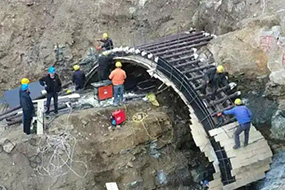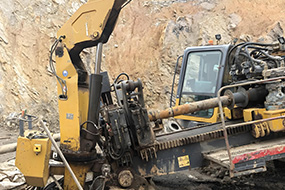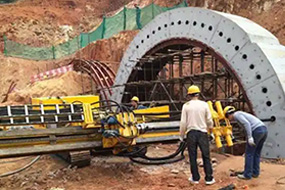
For decades, underground support relied heavily on traditional rock bolts that required pre-drilled holes, manual insertion, and separate grouting procedures. This multi-step process was not only time-consuming but also highly vulnerable to ground collapse during drilling. Self drilling anchor bolts have completely rewritten this narrative by combining drilling, grouting, and reinforcement into a single, continuous operation. The hollow bar design allows flush drilling fluid to escape through the bit, stabilizing the borehole as it advances. This eliminates the need for a casing or pre-drilled hole, which is particularly transformative in soft, fractured, or water-bearing ground conditions. As a result, engineers now specify self drilling anchors not merely as a convenience, but as a primary support solution where conventional methods are simply too risky or economically unfeasible. This technical leap has shifted industry standards from reactive ground control to proactive reinforcement, enabling safer access to previously unminable or unbuildable zones.
One of the core reasons self drilling anchor bolts are rewriting standards lies in their extraordinary geological adaptability. In weak overburden, karstic limestone, alluvial deposits, or highly jointed rock masses, conventional bolts often fail to achieve adequate pull-out resistance or cannot maintain a stable borehole. Self drilling anchors, however, can be installed in nearly any ground condition by simply adjusting the drill bit type, bar diameter, and grout mix. The Self Drilling Anchor Bolt, Anchor drill pipe, anchor drill rod system, for instance, offers various thread profiles and coupling designs that allow seamless extension to any required length. This inherent flexibility means one standardized system can handle a project's entire range of ground conditions, reducing the need for multiple support types. Moreover, the ability to drill through collapsing ground while simultaneously installing the bolt means support is applied at the exact moment of excavation, drastically reducing the risk of unravelling and surface loosening. Such universal applicability has made these bolts the default choice in challenging tunneling and mining environments across the globe.
In underground construction, time is the most expensive commodity. Traditional support installation could consume up to 30% of the entire excavation cycle, especially when ground conditions demanded careful drilling and separate resin cartridge or grout injection phases. Self drilling anchor bolts collapse these steps into one swift operation. A single drill rig can install a fully grouted, load-bearing anchor in a fraction of the time previously required, often less than five minutes per bolt including grout setting. This speed directly translates to faster tunnel advance rates, allowing contractors to meet tight schedules and reduce overhead costs. Another significant advantage is the elimination of borehole collapse waiting time; the bolt provides immediate support as the drill string rotates forward. Modern automated drilling rigs paired with self drilling anchors have even enabled fully mechanized support cycles, removing the need for workers to manually handle heavy steel in hazardous faces. Consequently, project planners can now estimate cycle times with higher confidence, knowing that ground support is no longer the unpredictable bottleneck it once was.
Safety remains the paramount concern in all underground operations, and self drilling anchor bolts have delivered a quantum leap in worker protection. The real-time support principle means that the ground is reinforced the instant the drill bit creates the hole, preventing the progressive loosening that often triggers rock falls and roof collapses. This is especially critical in fault zones where stand-up time is extremely short. Additionally, the high-torque threaded connection ensures that the steel bar and drill bit remain securely coupled during rotation, avoiding the risk of lost bits or broken drill rods that could create hidden voids. Unlike systems that require the drill to be removed before bolting, self drilling anchors maintain a continuous connection between the drilling rig and the ground, allowing the operator to monitor torque and grout pressure remotely from a shielded position. This reduction in personnel exposure to unsupported ground, combined with the elimination of manual resin handling and cartridge insertion, has resulted in measurably lower injury rates on projects that have adopted this technology. Regulatory bodies and major mining houses are now updating their support codes to recommend or even mandate self drilling systems in high-risk geological settings.
Beyond installation speed and safety, self drilling anchor bolts excel in their long-term structural performance. The full-length grouting achieved through the hollow bar creates a perfect mechanical interlock between the bolt, grout, and surrounding rock mass. Unlike point-anchored bolts that concentrate stress at the top of the borehole, self drilling anchors distribute load evenly along the entire embedment length, significantly enhancing shear and tensile resistance. This continuous bonding also prevents water ingress along the bolt shaft, a common cause of corrosion in conventional systems. Because the grout is pumped from the bottom of the hole upward, complete void-free encapsulation is achieved even in upward-inclined installations, ensuring uniform stress transfer. The high-strength steel used in these bolts, often with minimum yield strengths exceeding 600 MPa, provides greater load capacity per meter than traditional smooth bars, allowing engineers to reduce bolt density without compromising safety. This extended service life and superior load characteristics have led to their widespread adoption in permanent ground anchors, slope stabilization, and tunnel linings where decades of reliability are required. The measurable reduction in rehabilitation costs over the structure's lifespan makes these systems the economically and structurally superior choice.
The final frontier in rewriting underground support standards is the integration of self drilling anchor bolts with digital monitoring and automated installation data. Modern self drilling systems can now be equipped with electronic sensors or paired with smart drilling rigs that record parameters such as torque, penetration rate, grout volume, and pressure in real time. This data feeds directly into a digital twin of the underground workspace, allowing engineers to verify that every single anchor meets the design specification without relying on manual inspection or destructive pull-out tests. This shift toward data-driven quality assurance is transforming how support compliance is documented, especially for large-scale infrastructure projects subjected to strict auditing. Additionally, embedded fiber optic sensors within the hollow bar are beginning to provide continuous strain measurements over the entire anchor length, enabling early warning detection of ground movement or overloading. When combined with cloud-based visualization platforms, stakeholders can access live support integrity data from anywhere in the world. The convergence of mechanical simplicity and digital intelligence positions self drilling anchor technology not only as a physical support method but as the central node in the smart ground support systems of tomorrow. As construction and mining industries march toward fully autonomous operations, these bolts will form the scaffold on which next-generation underground safety and efficiency are built.