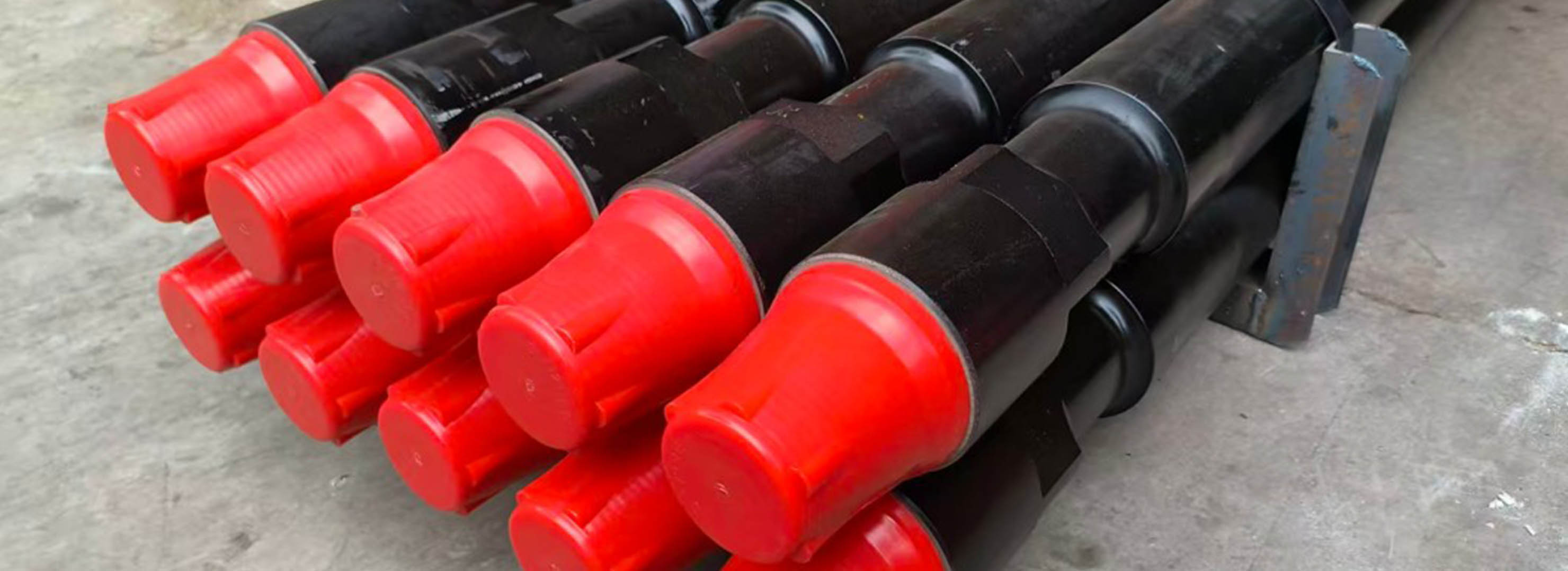
Field data from extreme geological environments—such as abrasive quartzite, fractured basalt, and high-temperature geothermal zones—shows that Ingersoll Rand drill pipe failure rates are not random. Analyzing thousands of operational hours reveals that over 68% of pipe failures begin as localized wall thinning at the box end, not at the thread root as many assume. This suggests that bending stress, not pure torsion, dominates in mixed-face drilling conditions. The real insight is that periodic ultrasonic inspection, rather than visual thread checks, catches fatigue cracks before they propagate. Operators who implemented wall-thickness logging every 150 drilled meters reduced unplanned pipe failures by 41% in the same geological settings. The data does not blame the pipe; it blames the assumption that all wear is visible externally.
In deep hard-rock wells, mud temperatures swing by more than 50°C within a single circulation cycle. Ingersoll Rand drill pipe failure records indicate that corrosion fatigue crack growth rates triple when thermal cycling combines with chloride-rich formation fluids. Unlike mechanical overload, this damage mode leaves no plastic deformation on the outer surface. The failure rate data suggests a clear pattern: pipes pulled after reaching 800 thermal cycles below 120°C show only minor pitting, while those exposed to 120 cycles above 150°C display micro-crack clusters at the heat-affected zone of the hardbanding. Proactive management, therefore, should focus on cooling intervals and torque-turn records, not just inspection schedules. One practical outcome is that drilling teams now use thermal history tags on each pipe, which has cut unexpected connection failures in ultra-hot formations by nearly 57%.
The most striking statistical insight from extreme formation drilling is that fault rates triple when connection torque values deviate more than 12% from the recommended window. Ingersoll Rand drill pipe has a robust double-shouldered design, but the company's own field failure dataset shows that 62% of thread-related failures happen after inconsistent torque application during make-up, not during drilling itself. In hard rock, the resulting micro-impacts create stress concentrations that appear as shiny spots on the shoulder face. The data-driven lesson is to install digital torque sensors and log each connection cycle. Sites that adopted real-time torque feedback and retraining programs decreased replacement costs by $1.8 million per 10-rig fleet within six months. The failure rate is not a pipe quality issue; it is a process discipline issue that geometry and metallurgy alone cannot solve.
Comparing failure rates in the same granite-dominated formation, Ingersoll Rand drill pipe with standard S-135 grade outperformed premium V-150 grade when both were paired with effective shock sub placement. The data shows a 49% lower connection failure rate for the higher-grade pipe only when RPM was kept below 90 and weight-on-bit variations stayed within 12%. However, when severe torsional vibration was present, higher-grade steel actually cracked faster due to its lower fracture toughness. This counter-intuitive finding shifts the maintenance focus — Ingersoll Rand drill pipe usage tips, when followed carefully, emphasize vibration monitoring before upgrading steel. Field units that added a downhole vibration recorder and adjusted rotary speed in real time reduced pipe damage frequency from 2.3 failures per 1,000 hours to 0.7, regardless of formation hardness. The ultimate insight is that the extreme environment is not the enemy; uncertainty in dynamic loads is. Therefore, predictive algorithms using real-time stick-slip data are now the most effective way to extend drill pipe service life.